Gold Jewelry Selling Guide
How to Get the Best Price for Your Gold Jewelry: Tips and Strategies
Key Summary
To get the best price for your gold jewellery, first check its purity, then sell it when the market is hot. ways to sell (online, in person, or on consignment), be sure to negotiate, and stay away from mistakes that lower the value. Get top dollar for every piece you sell if you know what you're doing, are patient, and find the right buyer.
A lot of people attempt to sell gold jewellery but leave with less than half its true value. You might encounter confusing quotes to compare, aggressive buyers, or uncertainties about the purity test outcomes. When every store has a different price, it's understandable to feel uncertain.
You can reverse that dynamic and seize control with the right strategy. Grasping concepts like purity, market timing, and your selling options provides you with genuine leverage. This guide outlines effective strategies to maximise your gold jewellery returns, from understanding its karat value to selecting the best time and place to sell.
Why It's Hard to Get a Fair Price
Different gold buyers have different ways of doing business, which is why two stores can give you very different prices. The refining fees, purity deductions, and profit margins usually give you 10-20% less than the market spot price. To get a favourable deal, you need to know what they're doing and why.
A lot of the time, buyers only look at the melt value when setting prices, not the quality of the work or how attractive the design is. If you don't show proof of purity, other people might not value your gold as much. Understanding carats, as discussed in our guide on How Gold Purity Is Measured, is crucial in this situation. Another factor is that most sellers don't check gold spot prices every day. But knowledge is power: if you know the market rate and purity breakdown for the day, buyers will see you as a knowledgeable seller and are less likely to lowball.
What Gold Purity Means and How It Affects Value
The amount of pure gold compared to other metals is called karat. For example, 18K gold contains 75% gold, 14K gold contains 58.3% gold, and 10K gold contains 41.7% gold.
When a buyer gives you a price, it's basically
(Weight in troy ounces) x (Purity fraction) x (Current spot price per troy ounce) x (discount for the buyer)
It's also common for the buyer to take off a small amount of weight, called "melt loss", which is 1-3%, because some metal is lost during refining.
It is important: you should know or ask for tests of purity instead of just trusting markings like "14K". Be real or fake. A buyer who has the right tools (XRF tester, acid test, spectrometer) gets a more accurate reading. Here is a breakdown of the results: "Your machine indicates that it contains 58.7% gold; let me explain what that means." The more you know about this, the less "fudging" the buyer can do.
Furthermore, for mixed pieces (gold, gemstones, and other metals), the buyer can separate or lower the value of the gems. The metal component by itself can aid in negotiations.
Timing the Sale: Market Trends & Signals
Your timing can dramatically affect your proceeds. For profound insight, see our post Understanding the Gold Market: How to Time the Sale of Your Jewellery.
Key Market Factors
- Spot price volatility: Gold prices fluctuate daily, sometimes by several dollars per ounce.
- Economic cycles and safe haven demand: Gold tends to rise during inflation, geopolitical uncertainty, or when currencies weaken.
- Seasonal and calendar effects: Some data suggest Q1 or end-of-year demand drives prices higher.
When to Sell
- Consider timing your sale during a phase of market strength or when inflation fears are high.
- Avoid selling in the depths of a crash or panic when liquidity is tight.
- Watch chart patterns or technical levels; if you see a clear upward breakout, that might be an opportune moment.
Choosing Where to Sell: Online vs In-Person & Other Channels
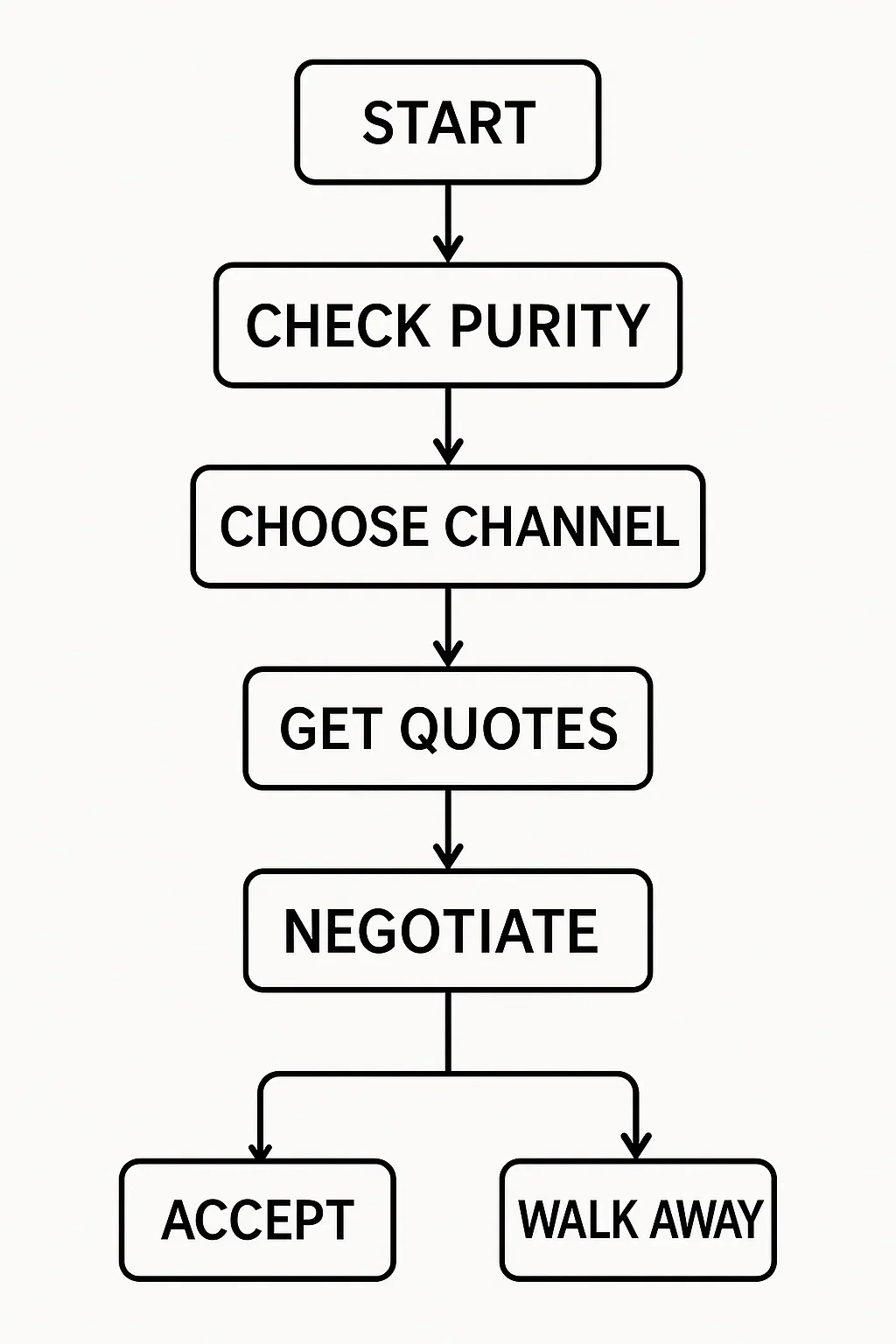
This is a major decision. The right channel can add or subtract tens of percentage points in value. Below, we compare major options and interlink with our post on The Pros and Cons of Selling Your Jewelry Online vs. In-Person.
Common Channels
- Local Jewelry Stores / Gold Buyers / Pawn Shops
- Pros: immediate payout, you can see them test the piece, and leverage local reputation
- Cons: high overhead, lower offers to cover operating costs
- Many local buyers quote based on scrap melt value.
- Online Gold Buyers/Refineries
- Pros: lower overhead, thus often better quotes; wider pool of buyers
- Cons: shipping risk, delays, trust issues
- Many guides suggest that selling online gets you the best price if you use a reputable buyer.
- Consignment / Auction / Private Sales
- Pros: potential premium if the piece has design or collectible value
- Cons: takes time, commission, uncertain sale
- Fox Fine Jewelry outlines consignment and private-sale routes as higher upside but requiring more effort.
Decision Considerations
- If your goal is speed, local channels win.
- If your goal is maximum money, online or consignment may yield more.
- If your piece is designer, vintage, or artistic, try consignment or auctions first.
- Always get multiple quotes (at least 3) to see the spread and pick the best.
Preparing Your Jewelry & Presentation
A little prep work can pay big dividends. Presenting your jewellery in the best possible form gives buyers more confidence and less excuse for discounts.
Cleaning and Presentation
- Gently clean the jewellery pieces using warm soapy water and a soft brush, then rinse and dry them thoroughly. Avoid harsh chemicals if gems or plating are involved. If possible, polish with a jeweller's cloth (nonabrasive).
- Remove excessive tarnish, dirt, and oils; buyers may undervalue a dirty or grimy piece.
Documentation
- Gather any original receipts, appraisals, certifications, or maker's marks.
- Note the carat stamps (e.g., 585, 750, 916) or hallmarks. These help validate purity.
- Please weigh the piece using a precision scale if available, or at least be aware of its approximate weight.
- Take clear, good-quality photos (if selling online or during negotiation). Use a white background and macro close-ups.
Grouping & Sorting
- Sort by carat level, by style, and by gemstone content. Buyers often prefer to handle homogeneous lots.
- If there are multiple small items, combining them may yield a better per-gramme quote.
Negotiation Tactics & Maximizing Offers
Even in gold buying, negotiation matters.
Before Quotes
- Ask the buyer, "What method are you using to test purity? What discount or fee do you apply?"
- Let the buyer make the first offer. Use it as a baseline for the counter.
- Don't show excitement or urgency; stay composed.
During Negotiation
- If they quote based on "melt value minus,", ask them to break down that percentage.
- Use competing offers as leverage: "I got a 1.5% better quote at another shop."
- Ask for small concessions: "Would you go one point lower on your discount if I sell you more?"
- For high-value items, insist on testing in front of you via certified equipment (XRF, spectrometer).
- If they hesitate, ask for time: "I'll think about it, I'm getting other quotes." Often they come up a bit.
After Agreement
- Get the offer in writing (weight, purity, discount).
- If you are shipping the item, ensure that you use tracked insurance and maintain a documented chain of custody.
For local sales, prefer paying by cheque or electronic transfer rather than opaque cash unless the buyer is very reputable.
Common Mistakes & Pitfalls to Avoid
Selling gold jewellery is fraught with traps. Be aware of these:
- Avoid accepting the first offer without conducting a thorough comparison.
- Avoid failing to check purity or relying blindly on markings.
- Selling during market dips or panic moments is a common practice.
- Selling during market dips or panic moments often results in emotion or urgency taking precedence over logic.
- Not documenting the deal (weight, purity, formula).
- When choosing unlicensed or fly-by-night buyers, always check reputation, licensing, and reviews
- Avoid shipping without insurance or a proper chain of custody.
- Ignoring the gem or design value, sometimes the best offer is more than scrap value.
- Failing to clean or present the pieces properly gives the buyer an excuse to discount.
Avoid these situations to reduce the likelihood of receiving an underpayment.
Frequently Asked Questions
Will I ever receive the full "retail price" back?
Rarely. Retail prices include design, branding, and retail markup. Buyers focus mostly on metal and gem value. Only in exceptional cases (designer, rare, or collectable) might you get closer to retail.
How many offers should I get?
At least three quotes from different channels. That gives you a range and leverage.
Can I sell broken or mismatched pieces?
Yes. Broken or mismatched items are usually valued for scrap metal. Sort them by carat and weight and sell as bulk lots.
Do I need to pay taxes on the sale?
In many jurisdictions, yes, treat this as a capital event. Keep records of weight, offer, and sale for tax reporting.
Is shipping safe when dealing with online buyers?
It can be if you use insured, tracked services and a documented chain of custody. Only use reputable buyers with clear return policies.
Final Thoughts
Getting top dollar for your gold jewellery isn't about luck; it's about preparation, knowledge, and wise decision-making. By understanding carats, timing your sale based on market trends, choosing the right sales channel, preparing your pieces well, negotiating carefully, and avoiding common pitfalls, you can greatly increase your net proceeds. Learn how to understand purity, avoid hidden fees, skip the common mistakes, and use smart timing your sale strategies.
If you're looking in your local area, use resources like online reviews, ask around for gold buyers near me for cash, and vet them thoroughly. This guide's strategies will empower you to convert your gold into cash without any regrets.
References
- How to get the most cash for your gold https://aupreciousmetals.com/blog/how-to-get-the-most-cash-for-your-gold
- Top Tips to Sell Gold Without Getting Undervalued https://www.isabullion.com/articles/top-tips-to-sell-gold-without-getting-undervalued/
- When is the best time to sell gold? https://www.physicalgold.com/insights/when-is-a-good-time-to-sell-gold/
- How to Sell Gold Jewelry for Maximum Value: A Complete 2024 Guide https://www.americancash4gold.com/post/how-to-sell-gold-jewelry-2024